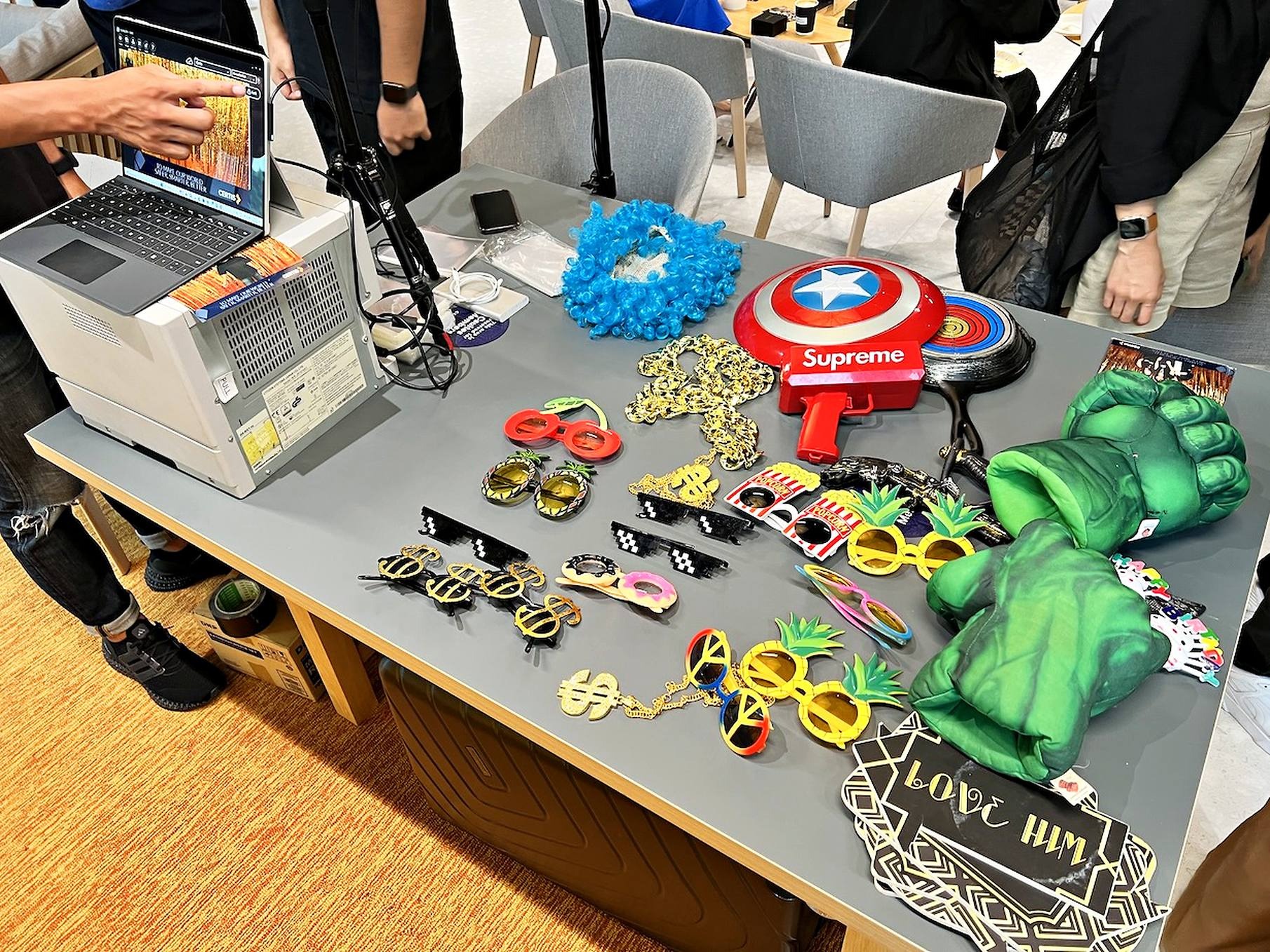
The most useful photobooth props answer a small question: what do I do with my hands when the camera starts? A short sign, a pair of glasses or a playful shape can suggest a pose without making a guest perform. This article is about selecting and presenting those prompts, including guests who would rather take a photograph without a prop.
photobooth props: build a small prop selection with different moods
Arrange a few choices that suggest different levels of playfulness: a simple celebratory sign, a more exaggerated accessory and an option that works for a pair or group. The objective is not to make everyone use the funniest item. It is to offer a prompt that suits the person approaching the camera.
Before the event, try reading each sign in a test photo. Words that seem large on the prop table can become small once several people share the frame. Remove items that repeat the same message or obscure faces unnecessarily. A smaller selection with clear visual differences can be easier to browse and return than a crowded table of near-identical signs.
Epic Media’s photobooth rental service includes a signature props station among its listed features. Discuss the actual selection for your booking rather than assuming every item in an older photograph will be available. Share the event theme and guest mix so the team can suggest a useful starting range. A clear brief is more helpful than asking for as many props as possible.

Make the display easy to browse and return to
An open case or divided cabinet can give each type of accessory a visible home. A flat table offers another approach, especially when the venue provides enough space to spread items out. Whichever format you use, avoid turning the display into temporary storage for drinks, handbags or registration materials. Those additions make the choices harder to see and can interrupt the next group’s visit.
Position the selection area where guests can browse before entering the camera position. Allow enough room for a person to pause without blocking the route to the backdrop. At a busy function, someone should be responsible for putting returned items back in place. That small reset keeps photobooth props inviting throughout the service period, rather than only in the opening photograph of the setup.

Let guests choose how playful they want to be
Some people immediately reach for the biggest accessory; others prefer a simple sign or no prop at all. Give both approaches equal room. A group photo can work well when one person holds a sign while others smile naturally. Guests should not feel that they have to wear something or perform a comic pose to join in.
For events where participants appreciate a little guidance, consider the standard photobooth, which uses a camera and an on-site photographer. Discuss how the operator will help groups settle into position. A short suggestion such as holding a sign lower can be enough. The aim is to keep faces visible and the interaction comfortable, without making every photograph look rehearsed or identical.

Match signs to the backdrop and the final photograph
A prop that looks clear on a table may become difficult to read in the finished picture. Consider its colour against the backdrop, how much space it occupies and whether its wording can be understood at print size. Short phrases are usually easier to work with than dense lines of text. Leave room for the people as well as the message.
If you are coordinating custom artwork, review the props alongside the event backdrop design. They do not all need the same pattern. A simpler accessory may be the better choice beside a detailed background. Ask for a sample composition or discuss a test photograph during setup. Confirm custom artwork, quantities and production timing in the quotation instead of treating bespoke signs as an automatic inclusion.

Check the camera view before guests arrive
Walk through a complete session during the setup check. Pick an item from the display, move to the camera mark and look at the resulting photograph. Notice whether a large accessory hides someone at the edge or whether a reflective surface catches a distracting light. The team can then adjust the arrangement before the first queue forms.
With a green screen, ask the provider which prop colours and materials work with the planned background effect. Avoid guessing from the physical screen alone. A design that looks fine in the room may behave differently in the processed image. If you choose a modern photobooth, also discuss how guests will see prompts or previews while holding their chosen accessories. Keep that interaction simple enough for a first-time visitor.

Plan the return routine as carefully as the selection
The photo session is only one part of the station’s rhythm. Once guests finish, they may wait for a print, look at a digital preview or call friends over. Give them a clear place to return photobooth props before they move on. A visible return section helps prevent accessories from disappearing into the wider event or being left beside the printer.
Agree with the supplier who handles tidying, checks and any cleaning routine during service. Let staff remove an unsuitable or damaged item rather than leaving it on display. For another example of a managed photo station with a props selection, see THAT Balloons’ instant print photobooth service. Use service descriptions to form your questions, then confirm the precise arrangement with the team delivering your own event.

Photobooth props and station layout examples
These examples show props within different photo environments: a marquee, a blue backdrop, a festive family session and several indoor setups. Compare where the display sits in relation to the camera, not just which accessories are on the table. The photographs are references for discussing your layout and do not promise an identical selection or venue arrangement.


Build a short prop brief for your event
Send the supplier the event date, venue, intended booth format and approximate guest mix. Explain whether the tone is playful, formal or somewhere between the two. Include any approved wording or brand artwork, together with the planned backdrop and print format. Identify the details that matter most so the team can distinguish essential requirements from optional ideas.
Finally, agree where guests will choose, pose, collect and return. Those four moments make photobooth props part of a coherent experience. When the display is clear and participation feels easy, guests can spend less time working out what to do and more time enjoying a photograph with the people they came to celebrate with.