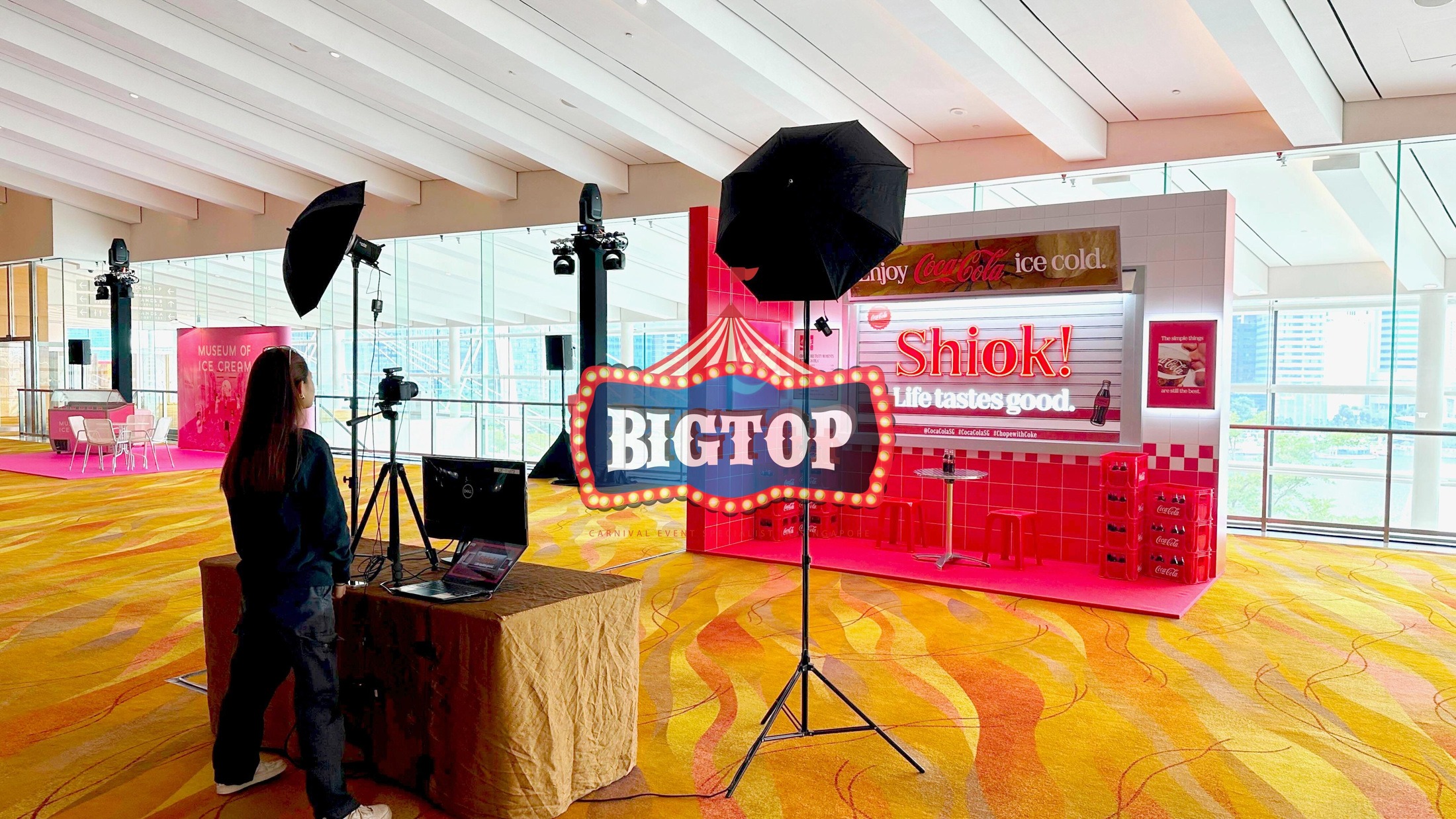
A photobooth can do more than place a logo beside a guest’s face. At a brand activation, it can connect the physical event space, the on-screen interaction and the keepsake someone takes home. The strongest result comes from deciding what each of those surfaces should communicate. Repeating the same large artwork everywhere can make the experience feel crowded; giving each element a clear job makes the campaign easier to recognise.
The examples below show several ways to build that connection, from a red branded backdrop with a separate camera station to an illuminated mirror booth and coordinated photo prints. They are useful visual references for planning a launch, customer gathering or corporate celebration in Singapore. The photographs show physical backdrops and booth equipment; they are not examples of digitally replaced green-screen scenes.

Give your photobooth a role in the campaign
Begin with the memory you want guests to leave with. A product launch might need the product colour to dominate the picture. An anniversary event may need a date and celebratory message. A staff gathering could put the team first, keeping the company identity smaller. These are different creative briefs, even when the same camera and printer could support them.
For a branded activation, divide the experience into three moments: recognising the installation from across the room, understanding what to do when approaching it, and keeping the finished photograph. A backdrop can handle recognition; a clear screen can guide participation; a print can carry the lasting message. This division avoids asking one crowded sign to perform every function.
Choose between a branded scene and a branded booth
The red Coca-Cola setup uses a substantial physical scene behind the guests, with the camera and lights standing separately. That arrangement gives the background a strong visual presence. It also means the organiser should think about which parts of the scene remain visible once people stand in front of it. The useful question is where the brand sits around the participants, rather than how large the artwork looks when the area is empty.
The Fuze Tea mirror example takes a different approach: the booth itself becomes a visible branded object. Its frame, illuminated outline and screen help it belong to the activation area. This is helpful when the installation needs to attract attention before anyone poses. A branded machine and a branded background can work together, but their graphics should have distinct priorities.

For a conventional camera-led arrangement, explore Epic Media’s standard photobooth service. Use the reference photographs to explain the desired presentation, then confirm the actual equipment, branding options and deliverables in the event proposal.
Make the touchscreen part of the experience
An interactive screen is close to the guest and can carry more detailed instructions than a distant backdrop. Keep its first action obvious. A short invitation to start a photo session is easier to follow than a screen filled with campaign messages, legal text and several competing buttons. The interface should also make it clear when participants need to stop touching the screen and look toward the camera.
The close-up below shows guests reviewing photographs on a mirror-booth display. When planning an interaction like this, discuss how the preview, selection and completion stages will appear. Do not assume that every booth supports the same touch controls or review options. Confirm the requested sequence with the supplier before creating the artwork, so the design follows the actual system.

Let the printed keepsake finish the story
The print is a separate design surface with a different viewing distance. Someone may hold it in their hand, place it on a desk or photograph it again on their phone. A campaign colour, a concise event name and an identifiable logo can connect it to the installation without taking space away from the guests’ faces. Small decorative details that work on a large wall may become distracting marks at print size.
The Fuze Tea prints show a coordinated colour treatment around the portraits. Use a physical sample to assess the balance between the picture and its frame. Ask which print layouts are available, where trimming occurs and whether the approved design leaves enough room around each portrait. Confirm print quantities and delivery arrangements in the quotation; the photographs alone do not establish package inclusions.

Use the approach to signal the occasion
A red carpet and queue poles can make a photo area feel like an arrival moment. In the event setup pictured here, the carpet visually connects the guest position to the backdrop, while the equipment remains outside that central space. This treatment suits celebrations where the act of stepping into the scene is part of the appeal, such as an anniversary reception or awards evening.
It is also worth deciding what guests see while approaching from the side. A booth may look polished from the camera angle but reveal a busy equipment desk from the main entrance. The side-view photographs help explain that difference. Discuss where an operator will stand and which side of the installation guests approach, so the finished presentation feels intentional from the real arrival direction.

Match the visual treatment to the brand’s mood
A reflective sequin wall communicates a different mood from a product-colour backdrop. It can create a celebratory setting for a dinner or launch reception, while a clear printed scene may communicate a particular campaign more directly. Neither treatment is automatically better. Choose according to whether the image should emphasise the occasion, the product or the people attending.
The gold-and-silver wall below is a physical photo setting with a lit sign. If you like that style, discuss how the sign and wall would relate to your own identity. Treat reference images as starting points for a tailored design, rather than assuming that every decorative element pictured is included with a booth booking.

Photobooth activation reference gallery
These additional views show the same design decisions from practical angles: the distance between a camera and backdrop, the framing of a carpeted photo area, and the way guests interact with a mirror display. Comparing the views helps distinguish the guest-facing scene from the equipment supporting it.


Bring a connected concept to your next event
When discussing a branded photobooth with Epic Media, share the campaign artwork, the intended audience and the takeaway you want guests to remember. Identify which references appeal to you: a strong physical backdrop, a recognisable booth exterior, a guided screen interaction or a coordinated printed frame. That gives the creative discussion a useful starting point without copying another campaign.
Explore our photobooth rental options in Singapore to discuss an appropriate format. For a further physical-backdrop reference, Big Top’s photobooth service can help illustrate event presentation options. The final proposal should confirm the selected equipment, artwork surfaces, print format and staffing, so the finished experience supports your campaign from first impression to take-home photograph.